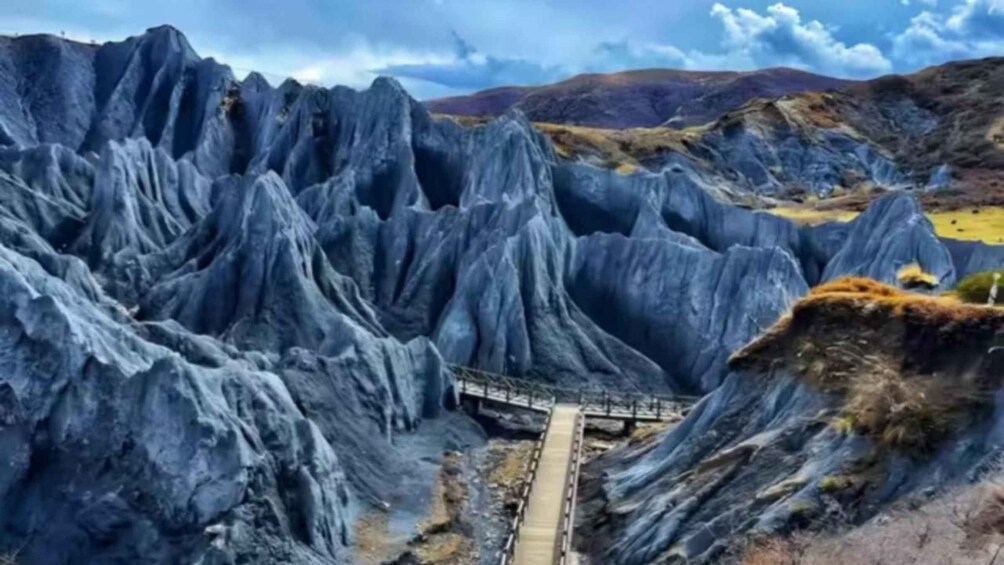
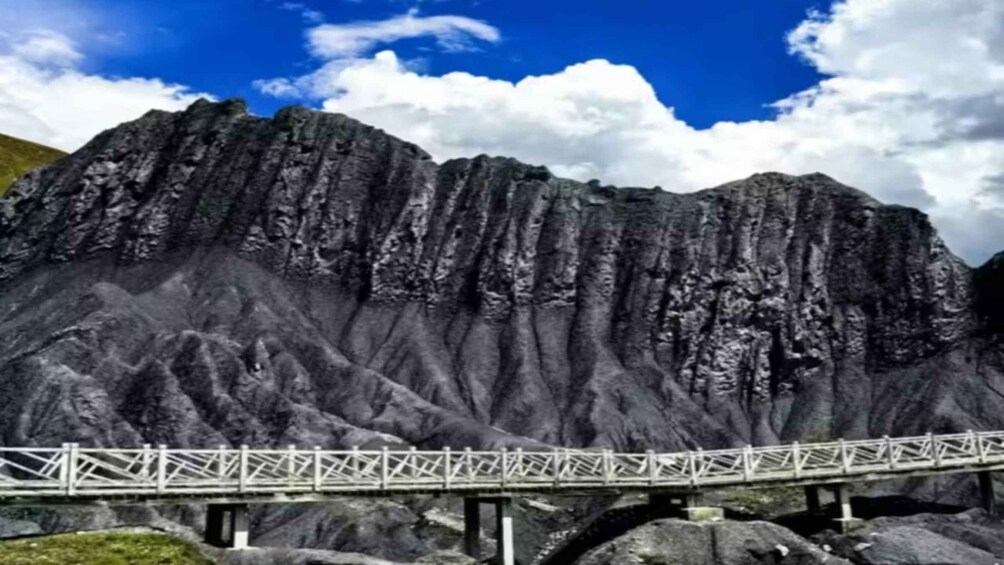
Drive along National Highway 318 into Bamei Town, Daofu, Garzê, and encounter a magical wonderland forged deep within the earth: Moshi Park. Known as the eighth marvel along China’s most beautiful scenic route, it features unique plateau mylonite stone forests and serves as a geological museum standing on the eastern edge of the Qinghai-Tibet Plateau.
For millions of years, tectonic compression, wind, and frost erosion have shaped this stark, fantastical landscape of black rock peaks. Stepping inside feels like crossing the stars and landing on the surface of a distant alien planet.
The scenic area sits at an altitude of approximately 3,500 meters, with stone forests stretching along the Xianshui River Fault Zone. Mylonite has a remarkable color-changing trait: it turns deep jet black in humid air, while taking on silvery grey-blue hues on dry, sunny days. Its tones shift constantly with clouds and light, transforming multiple times within a single day.
Countless stone peaks rise abruptly in varied forms: some pierce the sky like sharp swords, some sprawl across valleys like the bones of giant beasts, and others resemble frozen black ocean waves. Suspended wooden boardwalks weave through the stone forest gorges. Stroll along the path, with jagged black rocks and crisscrossing gullies lining both sides, offering sci-fi-style shots at every turn.
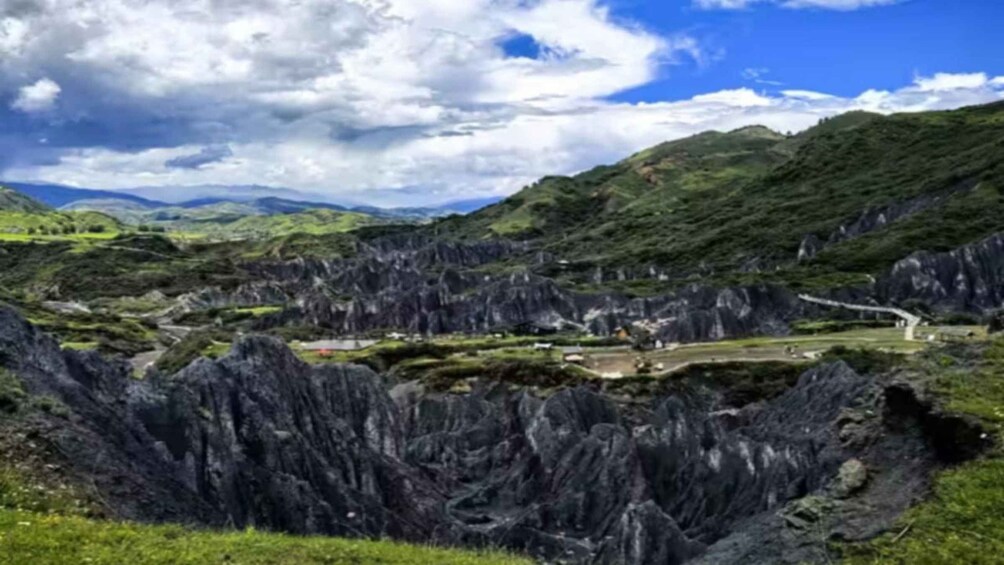
From the viewing platform, see thousands of stone towers stretch endlessly. The dark stone canyons extend toward the distance, creating a striking visual contrast with the snow-capped peaks afar and alpine meadows nearby.
Moshi’s black stones coexist harmoniously with plateau meadows. Beyond the stark rock formations lies soft, vibrant wilderness. In spring and summer, alpine meadows are blanketed in green, dotted with Gesang flowers, and the black stone forest rises from emerald grassland for a breathtaking contrast.
When autumn arrives, surrounding forests turn golden and crimson, wrapping the dark stone formations in rich, layered colors. Winter brings heavy snow, capping the black rock summits. The interplay of black and white creates a vast, solemn scene. Wind whistles through rock crevices, and the world falls into serene grandeur. Occasionally, plump marmots peek out from stone cracks, injecting liveliness into this stark extraterrestrial terrain.
This geological marvel bears profound Kham cultural heritage and ancient legends of King Gesar. To the ancestral Tibetan people, these stone forests represent the bones of the earth, holding tales of mountain deities. Scattered Tibetan villages surround the site, white stupas stand quietly, colorful prayer flags flutter in the wind, and mani stones carry devout wishes. Herders’ songs drift across valleys, breathing warmth and stories into the cold black rocks.