Begin at the confluence of the Suzhou Creek and the Huangpu River, the very site where Shanghai’s modern history was sparked 180 years ago. Decode the architectural DNA of a city that refuses to stand still.
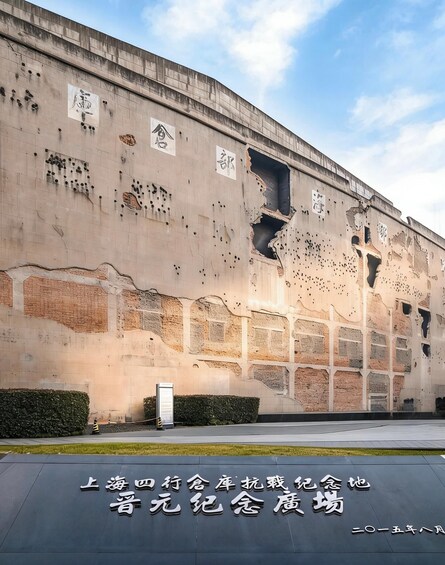
Start at the Sihang Warehouse, a concrete fortress that stood as the “Line of Life and Death” between the International Settlement and the Chinese territory. Touch the original west wall, preserved with hundreds of shell craters from the 1937 defense. Discuss how the city’s industrial backbone was forged through fire and grit.
As you move east, the narrative shifts to the “Functional Engine” of old Shanghai. Visit Shenyu Li, a meticulously restored Shikumen lane, where the city’s early middle-class elite blended Chinese lifestyle with Western comforts.
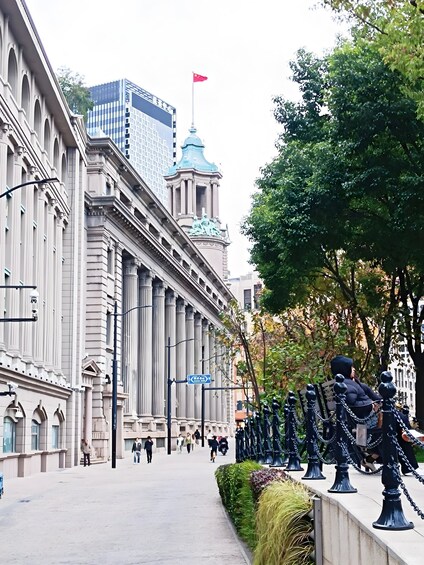
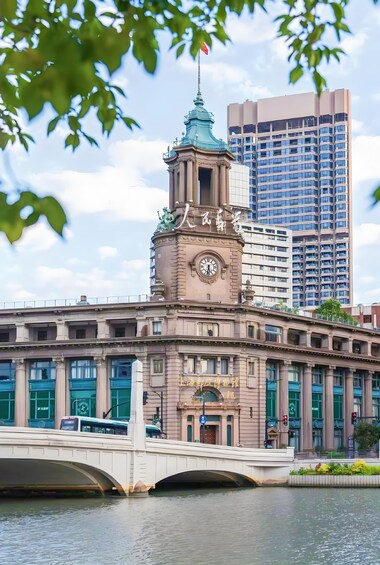
Explore the Embankment Building, once the largest apartment in the Far East. Learn how Sir Victor Sassoon used “S-shaped” Art Deco curves to solve the high-density living challenges of a booming city. Stand beneath the Corinthian columns of the General Post Office to understand Shanghai’s 20th-century status as the premier communication hub of the Orient.
At the mouth of the creek, architecture turns from efficiency to elegance. Cross the Garden Bridge, China’s first all-steel bridge and an industrial icon. This is the “Portal” where the gentle Suzhou Creek meets the majestic Huangpu River—the boundary between “Old” and “New” Shanghai.
Visit the Astor House Hotel, the site of Shanghai’s first electric light and first film screening. Trace the footsteps of Albert Einstein and Charlie Chaplin, who stayed here when Shanghai was the most modern city in the East.
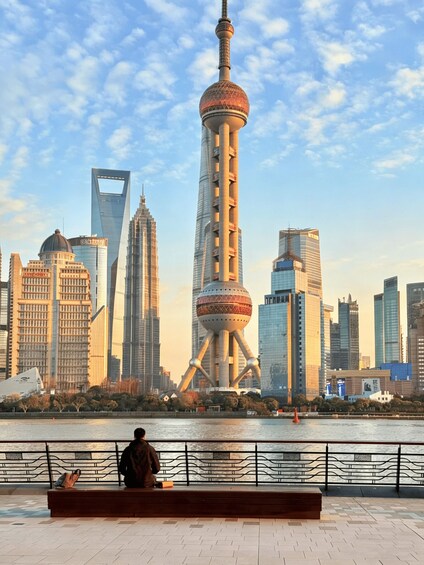
Conclude your journey at the North Bund Waterfront. From a single vantage point, witness the Triple-Timeline of Shanghai: the original shipyard roots, the granite-clad Bund heritage cluster, and the Lujiazui “Big Three” skyscrapers piercing the clouds.