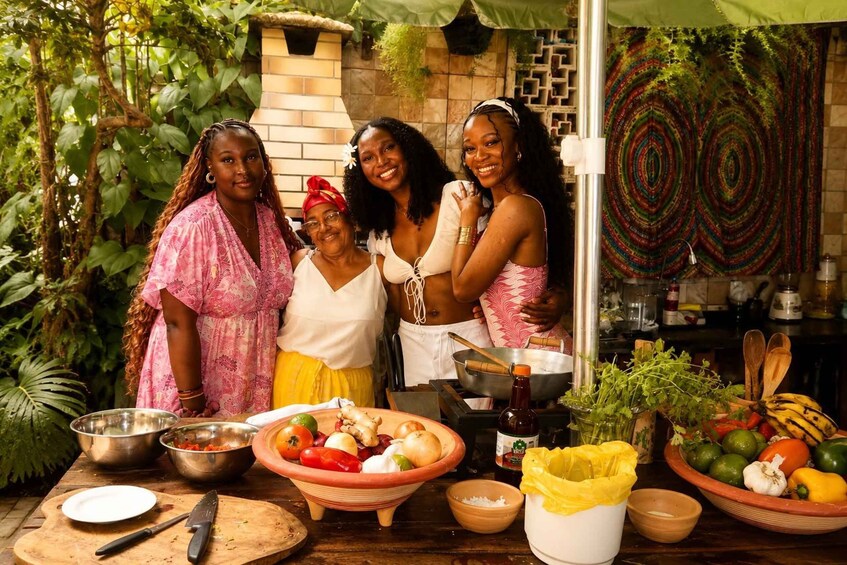
Bahia doesn't ask to be understood from a menu — it asks to be tasted, heard, and felt.
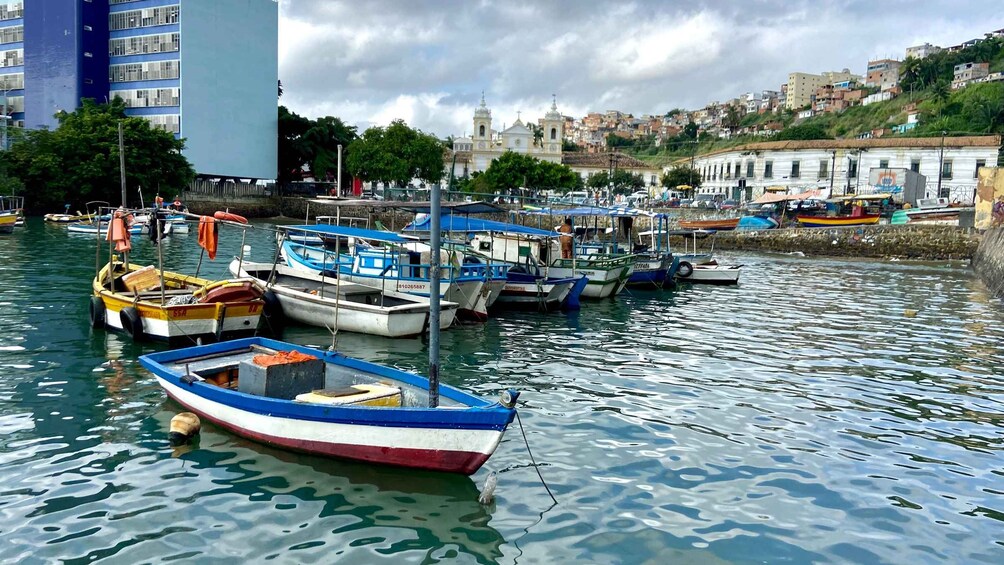
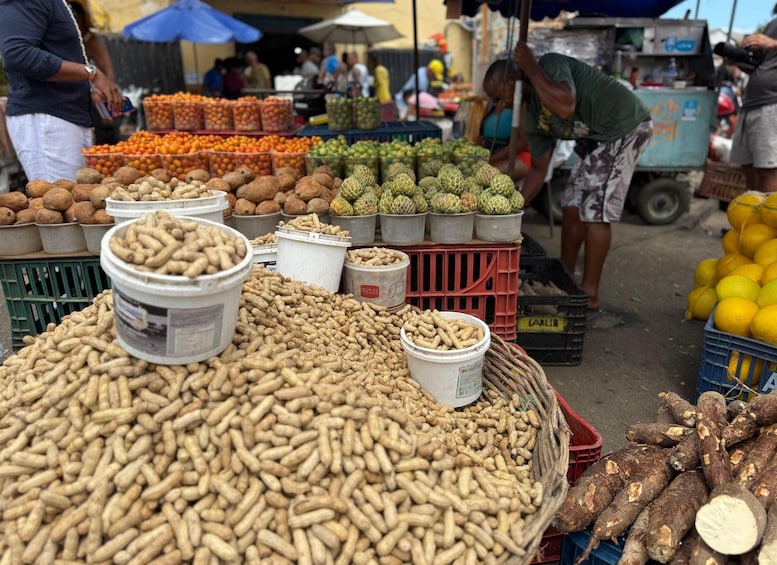
This is not a quick stop for a photo of a market stall. It begins at Mercado São Joaquim, one of the great living markets of Brazil, in the noise and color of vendors calling out the morning's catch, stacks of dendê palm fruit, and baskets of herbs used in Bahian kitchens for centuries. Your guide doesn't just point — they explain how each ingredient carries the imprint of Africa, Portugal and Brazil's first peoples, woven together on this coast for 500 years.
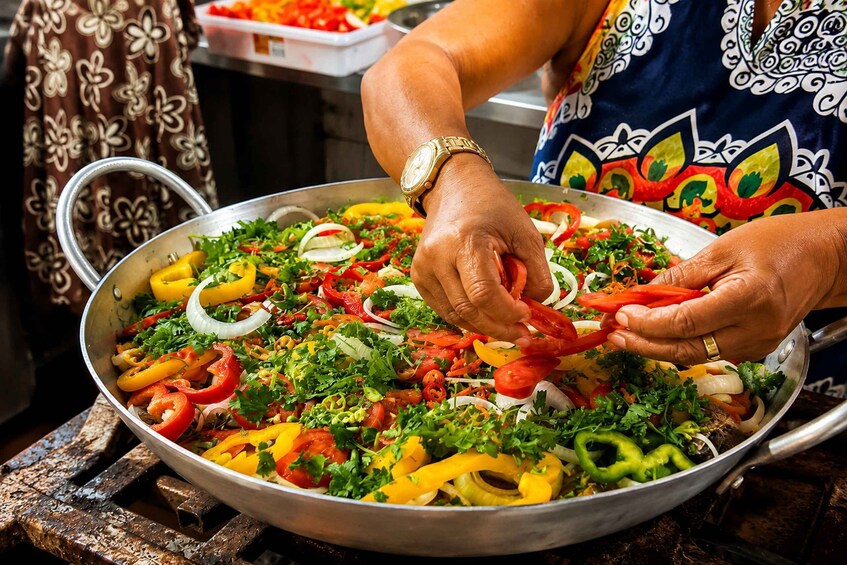
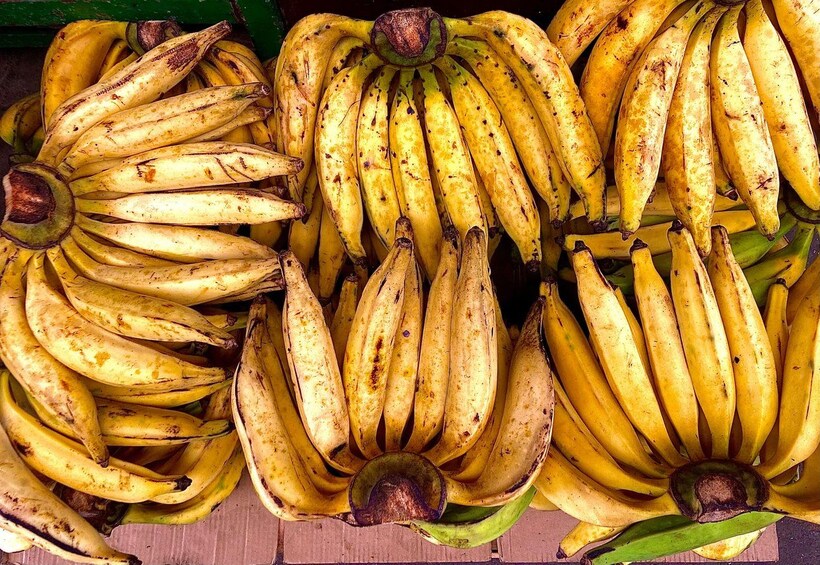
From there, the market gives way to something markets can't sell: an open door into a real Bahian home. No stage, no uniform, no script — just a kitchen and a garden where recipes have been prepared by hand, the same way, for generations. Side by side with your hosts, you'll help cook a full Bahian table: a crab starter, shrimp moqueca simmered in coconut and dendê oil, fried plantain, rice, dendê farofa and a traditional Afro-Bahian bean stew — pausing along the way for caipirinhas made with whatever fruit is ripest that day.
Then comes what no class can teach: sitting down together to eat it all, at a table that has fed a family for years, in a home that opened its door to you.
This is a private, small-group experience — not a demonstration, an invitation. Private transportation, your guide, the market visit, every ingredient, the full meal and drinks are included, door to door. What you're paying for isn't a recipe. It's an afternoon inside the real Bahia.