

- Senaraikan hartanah
- Sokongan
- Perjalanan
 Ahli boleh jimat sebanyak 10% atau lebih di lebih daripada 100,000 hotel apabila anda log masuk
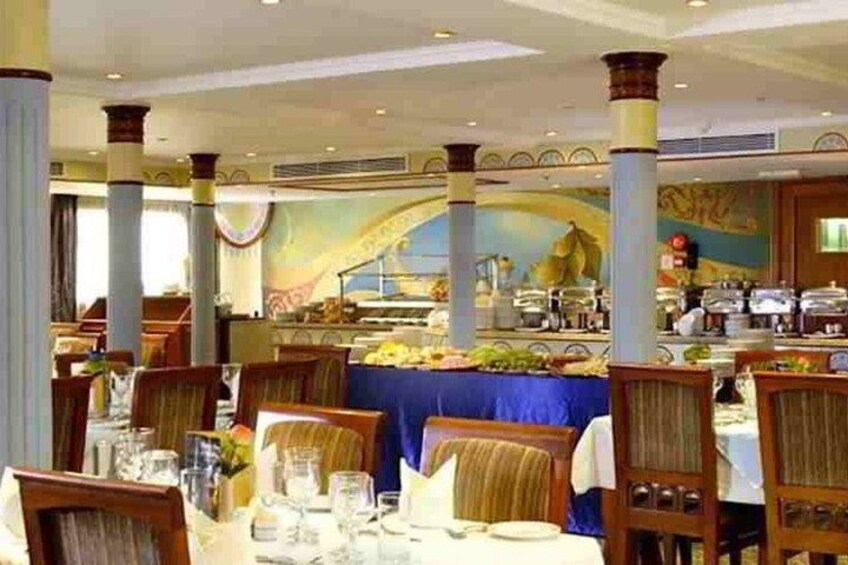
Private 6 Days Tour Cairo Aswan Abu Simbel Luxor And Nile Cruise
Oleh Queen Nefertari Tours
Pembatalan percuma tersedia
termasuk cukai & fi
seorang dewasa*
*Dapatkan harga lebih rendah dengan memilih tiket berbilang dewasa
Ciri
- Pembatalan percuma tersedia
- 6h
- Baucar mudah alih
- Pengesahan serta-merta
- Pengambilan dari hotel terpilih
- Berbilang bahasa
Gambaran keseluruhan
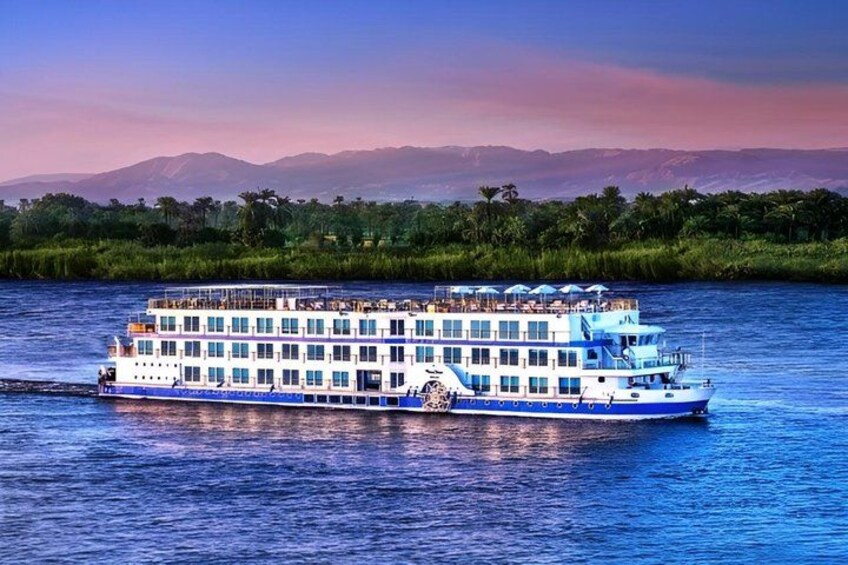
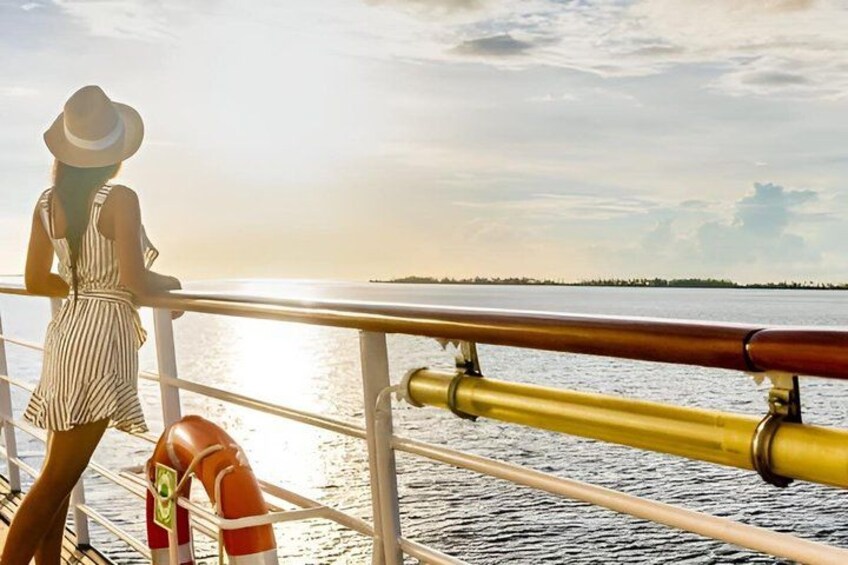
Cruise the iconic Nile River from Aswan to Luxor on a luxurious five-star vessel, exploring Egypt's rich history along the way. This six-day itinerary includes visits to the majestic Pyramids and the Gem Museum in Cairo, followed by a leisurely cruise featuring stops at renowned sites like the Abu Simbel Temple and the Edfu Horus Temple. With three nights aboard the cruise ship, enjoy delicious meals and personalized attention from an Egyptologist guide in a private setting.
- Discover ancient temples and archaeological wonders on a Nile cruise
- Visit Cairo's Pyramids and Gem Museum before sailing
- Includes three nights on a five-star cruise with meals
- Private tour for your group with an expert Egyptologist guide
Lokasi aktiviti
- Cairo International Airport
- Oruba Road
- 4475001, Sheraton Al Matar, Cairo Governorate, Egypt
Titik Pertemuan/Penebusan
- Cairo International Airport
- Oruba Road
- 4475001, Sheraton Al Matar, Cairo Governorate, Egypt
Semak ketersediaan
Private 6 Days Tour Cairo Aswan Abu Simbel Luxor And Nile Cruise
- 6hari
- Bahasa Arab
Pickup included
Butiran harga
RM 8,041.99 x 1 DewasaRM 8,041.99
Dibayar semasa aktivitiRM 230.86
Jumlah
termasuk cukai & fi
*Dapatkan harga yang lebih rendah dengan memilih lebih daripada 2 orang dewasa
Perkara yang dirangkumi dan tidak dirangkumi
- Private transportation
- Entrance fees
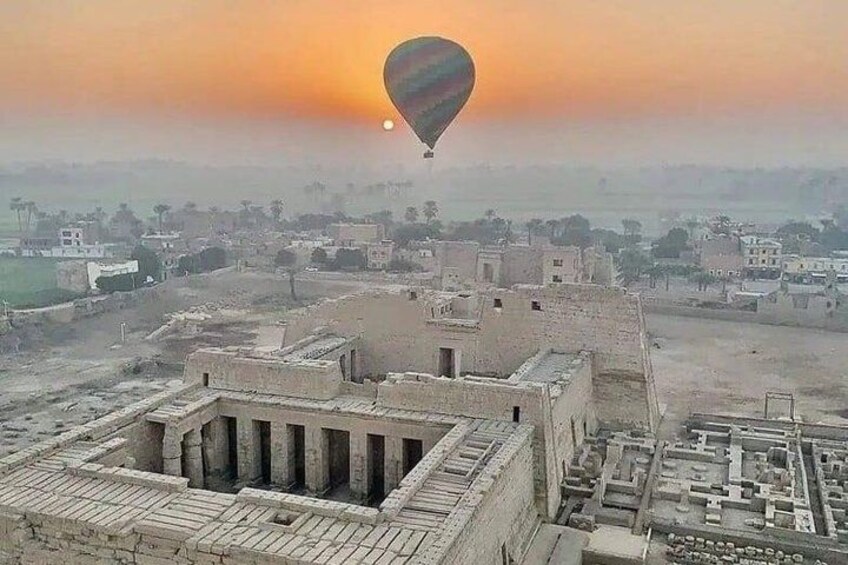
- Hot Air Balloon in luxor
- Air-conditioned vehicle
- 1 Free for 15 Paying Guests
- Assistance of our personal during the tour Portage when needed
- Meet and Assist upon arrival till Departure 24/7
- Flight Tickets from cairo to aswan and from luxor to cairo
- Entrance to the mention sightseeing
- English speaking Egyptology
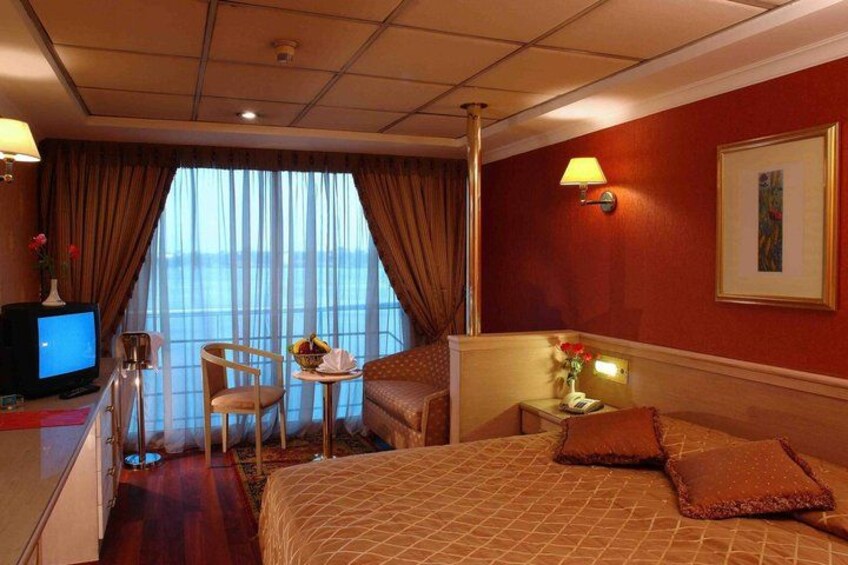
- 3 nights accommodation in 5 star Nile Cruise from Aswan to Luxor
- Sharing Small Group To Abu Simbel
- Private English Speaking Egyptology Guide
- Gratuities
- drinks on board
- Mandatory port & service charges: $49 per person, per night — not included in the listed price, payable locally.
- A child less than 5 years is not allowed for the balloon trip.
Ketahui sebelum anda tempah
- Infants are required to sit on an adult’s lap
- Suitable for all physical fitness levels
- Mandatory port & service charges: $49 per person, per night — not included in the listed price, payable locally.
Jadual perjalanan aktiviti
Hari 1: Arrival Day Meet and assist by our representative visit the Great Pyramids And the New GEM Museum
- 4 hentian
- Hidangan: Tidak termasuk
- Penginapan: Overnight in Hotel in Cairo
Cairo International Airport (Sambil lalu)
Arrival in Cairo
Arrival at Cairo International Airport
Meet and assist by our representative
Transfer to your hotel in Cairo
Free evening relax or optional Cairo city tour
Overnight in Cairo
Pyramids of Giza
- 2j
- Termasuk tiket masuk
The pyramids of Giza and the Great Sphinx are among the most popular tourist destinations in the world, and indeed already were even in Roman times. Each of these spectacular structures served as the final resting place of a king of the 4th Dynasty (c.2613–2494 BC). The Great Pyramid of Giza was built for king Khufu (c.2589–2566 BC), and the other two for Khafre and Menkaure, his son and grandson. Khufu’s pyramid is both the oldest and largest of the three, and the first building to exceed it in height would not be built for another 3,800 years!
Although the three pyramids dominate the plateau, they are in fact surrounded by many other monuments.
The Grand Egyptian Museum
- 3j
- Termasuk tiket masuk
The Grand Egyptian Museum is a national archaeological museum in Giza, Egypt. Dedicated to Ancient Egypt and its culture, society, and artifacts, the GEM is the largest museum in the world for a single civilization.
Cairo Festival City Mall (Sambil lalu)
Free evening relax or optional Cairo city tour
Hari 2: Cairo Aswan / Nile Cruise Embarkation Breakfast at hotel, transfer to Cairo Airport for flight to Aswan
- 4 hentian
- Hidangan: makan tengah hari, snek, sarapan
- Penginapan: Overnight in Hotel in Aswan
Aswan (Sambil lalu)
Meet your Egyptologist guide upon arrival
Visit High Dam, Philae Temple, and Unfinished Obelisk
Check in to your 5-star Nile Cruise
Temple of Philae
- 2j
- Termasuk tiket masuk
The monuments of Philae include many structures dating predominantly to the Ptolemaic Period (332–30 BC). The most prominent of these is a temple begun by Ptolemy II Philadelphus (285–246 BC), which he dedicated to Isis, the mother of Horus, the god of kingship. A scene in the mammisi, or birth room, where the birth of Horus was celebrated, depicts Isis suckling her son Horus in the marshes.
The temple of Isis was one of the last ancient Egyptian temples to remain active, as it continued to function until the reign of the Byzantine Emperor Justinian I (527–565 AD), who ordered the foreclosure of all pagan temples. It is here that a priest of Isis named Esmet-Akhom carved the very last dated hieroglyphic inscription, which dates to the late 4th century AD (394 AD). The temple was converted into a Christian church and many inscriptions were deliberately destroyed.
Unfinished Obelisk
- 30m
- Termasuk tiket masuk
The Unfinished Obelisk was discovered in the early twentieth century after it had been covered by sand for thousands of years. It remains as you see it today in one of the Aswan quarries, famous for its supply of hard and high-quality stone. Believed to have been commissioned by Hatshepsut (c. 1473–1458 BC) for the temple of Amun in Karnak, work was abandoned because of flaws in the stone and the presence of multiple fissures. Had it been finished, it would have weighed 1168 tonnes, and stood at a height of around 42 metres, taller than any other ancient Egyptian obelisk.
Aswan High Dam
- 1j
- Termasuk tiket masuk
Aswan High dam came in between 1954 to 1959 with plans for a New Aswan dam being suggested by a half greek, half Egyptian engineer called Adrian Daninios. Evidently, the government of Farouk showed no interest in the plans and went with Harold Edwin Hursts proposal instead. The aforementioned plan was comprised of storing the water in Sudan and Ethiopia due to the low evaporation rate in those areas. This venture, however, was short-lived as with the Officer movement led by Gamal Abdel Nasser Daninios plan was put into motion. Fearing the spread of Russian influence in the area both America and the United Kingdom offered to participate in the funding of the Dam. this lead to a loan of 270 million U.S.D in return for Nasser Spearheading the Arab-Israeli conflict due to him identifying as a neutralist and a natural leader.
Hari 3: Visit Abu Simbel Temple And Sail to Kom Ombo Temple
- 1 hentian
- Hidangan: sarapan, makan tengah hari, snek
- Penginapan: Overnight On 5 Stars Nile Cruise
Abu Simbel Temple Complex
- 6j
- Termasuk tiket masuk
The Great Temple of Abu Simbel, in Nubia near Egypt’s southern border, is among the most awe-inspiring monuments of Egypt. It was cut into the living rock by King Ramesses II (the Great) of the Nineteenth Dynasty, around 1264 BC. The temple is most well known for the four imposing seated colossal statues that dominate its façade. One of these collapsed because of an ancient earthquake, and its fragments can still be seen on the ground.
Colossal standing statues of the king line the main hall, leading to the sanctuary where four deities are sat: Amun Ra, Ra Horakhty, Ptah, and a deified version of Ramesses II. The temple was built with such precision that on two days a year, the 22nd of February and 22nd of October, the sun’s rays enter the temple, cross the main hall, and illuminate the innermost statues.
Another rock-cut temple to the north, known as the Small Temple, is dedicated to the goddess Hathor and Ramesses II’s Great Royal Wife, Queen Nefertari.
Hari 4: Visit Kom Ombo Temple And Overnight in Edfu
- 1 hentian
- Hidangan: sarapan, makan tengah hari, snek
- Penginapan: Overnight on 5 stars Nile Cruise
Temple of Kom Ombo
- 2j
- Termasuk tiket masuk
The site gets its name from Arabic kum ‘mound’, a term found in the names of many archaeological sites, and ‘Ombo’, which ultimately derives from ancient Egyptian Nubt, interpreted as meaning ‘the golden (city).’ The city’s temple is dedicated to two deities: the crocodile god Sobek, and the falcon god Har wer (Horus the Elder). Although an earlier temple once stood here already during the New Kingdom (c. 1550–1069 BC), the present structure was built during the Graeco-Roman Period (332 BC–395 AD), with the earliest attested royal name in it being Ptolemy VI Philometor’s (180–145 BC). Most of the decoration was completed by Ptolemy XII Neos Dionysos (80–51 BC).
Hari 5: Visit Edfu Temtple And Luxor Temple In The Afternoon
- 2 hentian
- Hidangan: sarapan, makan tengah hari, snek
- Penginapan: Overnight On 5 Stars Nile Cruise
Temple of Horus
- 2j
- Termasuk tiket masuk
Edfu Temple is one of the most striking and complete of ancient Egyptian temples and is dedicated to the worship of the god Horus. Situated on the western bank of the Nile, its construction began during the reign of Ptolemy III (246–221 BC) in 237 BC, but was completed in the reign of Ptolemy XII (80–51 BC) in 57 BC, 180 years later.
The temple remained buried under layers of settlement debris for millennia, which is why its architectural and decorative elements have survived so well. In 1860 the French archaeologist Auguste Mariette uncovered and restored parts of the temple.
The temple is fronted by two massive pylons that bear scenes of Ptolemy XII conquering his enemies and worshiping deities. Two large granite statues of the falcon-god Horus stand before the pylons. Once through the pylons you enter into a large Peristyle court lined with columns decorated with floral capitals.
Luxor Temple
- 2j
- Termasuk tiket masuk
Luxor Temple, Ipet-resyt “Southern Sanctuary” to the ancient Egyptians, was so called because of its location within ancient Thebes (modern Luxor). It is located around three kilometers to the south of Karnak Temple, to which it was once linked with a processional way bordered with sphinxes. The oldest evidence for this temple dates to the Eighteenth Dynasty (c.1550–1295 BC).
Ipet-resyt, unlike most other ancient Egyptian temples, is not laid out on an east-west axis, but is oriented towards Karnak. This is because Luxor Temple was the main venue for one the most important of ancient Egyptian religious celebrations, when the cult images of Amun, his wife Mut, and their son, the lunar god Khonsu, were taken from their temples in Karnak, and transported in a grand procession to Luxor Temple so they could visit the god that resides there, Amenemopet. This was the Opet Festival.
Hari 6: Hot Air Balloon - Valley Of The Kings - Hatshpsut Temple - Karnak Temple
- 7 hentian
- Hidangan: sarapan
- Penginapan: Tidak termasuk
Hot air balloon Luxor Take Off Site
- 30m
- Termasuk tiket masuk
A hot air balloon ride in Luxor, Egypt, offers a breathtaking sunrise experience over the Nile and ancient sites like the Valley of the Kings and Temple of Hatshepsut. Flights typically last 45-60 minutes, departing early morning (around 4:00-5:00 AM)
Valley of the Kings
- 2j
- Termasuk tiket masuk
The powerful kings of the New Kingdom were laid to rest under the shadow of a pyramid-shaped peak rising out of the cliffs surrounding the valley. The selection of even the specific valley in which the royal tombs were excavated was not left to chance. The pyramid was a symbol of rebirth and thus eternal life, and the presence of a natural pyramid was seen as a sign of the divine This entire area, and the peak itself was sacred to a funerary aspect of the goddess Hathor: the “Mistress of the West”.
The isolated nature of this valley was yet another reason for its selection as the final resting place of the pharaoh Tomb robberies occurred even in ancient times The Egyptians were aware of this having seen the a fate of the Old and Middle Kingdom pyramids so they opted for hidden underground tombs in a secluded desert valley The first New Kingdom ruler that is confirmed to have been buried in the Valley of the Kings was Thutmose I (c.1504–1492 BC) the third king of the Eighteenth Dynasty.
Temple of Hatshepsut at Deir el Bahari
- 1j 30m
- Termasuk tiket masuk
Hatshepsut (c.1473–1458 BC), the queen who became pharaoh, built a magnificent temple at Deir al-Bahari, on the west back of Luxor. It lies directly across the Nile from Karnak Temple, the main sanctuary of the god Amun. Hatshepsut’s temple, Djeser-djeseru “the Holy of Holies” was designed by the chief steward of Amun, Senenmut.
The temple consists of three levels each of which has a colonnade at its far end. On the uppermost level, an open courtyard lies just beyond the portico. Mummiform statues of Hatshepsut as Osiris, the god of the dead, lean against its pillars.
This is because Djeser-djeseru is Hatshepsut’s mortuary temple, where her cult was practiced after her death, when she attained the blessed state of Osiris. Far from being devoted solely to her, the temple also includes sections for the cults of her revered father Thutmose I, the goddess Hathor, and the funerary god Anubis. An altar, open to the sky and the sun, was dedicated to the cult of the solar Ra-Horakhty.
Temple of Karnak
- 2j
- Termasuk tiket masuk
Aptly called Ipet‑Sut ‘The Most Select of Places’ by the ancient Egyptians, Karnak was one of the most important sites of all. Located on the east bank of Thebes (modern Luxor), Upper Egypt, it is the site of many temples and chapels, and it was in the Great Temple of Amun that the cult of the god Amun of Thebes was conducted. As such, it was extremely wealthy and its priesthood held great political power.
The line of kings who reunified Egypt after the First Intermediate Period hailed from Thebes. It thus became one of the most important cities, a position that it would continue to hold throughout the majority of ancient Egyptian history. The importance of Amun rose in tandem with the city’s rise to prominence. From the earliest evidence for it from the reign of Intef II (c. 2112–2063 BC) to the Ptolemaic Period (305 BC–30 BC) .
Luxor (Sambil lalu)
end of the day we can take you to luxor airport or to your hotel in luxor
Colossi of Memnon
- 15m
- Termasuk tiket masuk
The Colossus of Memnon consists of two huge seated statues, each carved from a single block of stone. They depict Pharaoh Amenhotep III, who ruled during a golden age of prosperity, peace, and artistic achievement. The statues once marked the grand entrance to his vast mortuary temple — a structure so enormous that ancient Egyptians called it the “Temple of Millions of Years.”
Today, the two statues stand alone in the fields, but their presence continues to tell the story of Egypt’s architectural brilliance.
Obelisk of Queen Hapshetsut,
- 10m
- Termasuk tiket masuk
The Obelisks of Queen Hatshepsut and Tutomosis I, the Temple of Amon adorned with lotus and papyrus designs
Lokasi
Lokasi aktiviti
- Cairo International Airport
- Oruba Road
- 4475001, Sheraton Al Matar, Cairo Governorate, Egypt
Titik Pertemuan/Penebusan
- Cairo International Airport
- Oruba Road
- 4475001, Sheraton Al Matar, Cairo Governorate, Egypt
Tawaran Terbaik untuk Aktiviti Menarik
Alami keajaiban dunia dengan lebih dekat dengan tawaran hebat untuk aktiviti menarik sama ada dekat atau jauh. Expedia menawarkan aktiviti unik yang membolehkan anda menerokai Sheraton Al Matar dengan cara tersendiri. Sama ada anda menyukai alam semula jadi, budaya, makanan atau pengembaraan, kami mempunyai aktiviti yang sempurna untuk anda.
Pengalaman Popular di Sheraton Al Matar
Dengan begitu banyak aktiviti menarik di Sheraton Al Matar, merancang hari untuk keluar mungkin menjadi satu cabaran. Expedia di sini untuk memudahkan pencarian tarikan, lawatan dan aktiviti terbaik di Sheraton Al Matar. Keluarga, pasangan dan pengembara perniagaan semuanya dapat mencari aktiviti yang sempurna di Sheraton Al Matar untuk mencipta kenangan indah dengan bantuan Expedia.