Begin with an introduction to Tsuji-ga-hana, a dyeing style that flourished about 500 years ago during the Azuchi-Momoyama period. Using archival photographs, restored fabrics, and finished works, you will learn about its history and cultural importance. You will also have the chance to view kimono and textile pieces created by the artisan, gaining a deeper appreciation of this traditional craft.
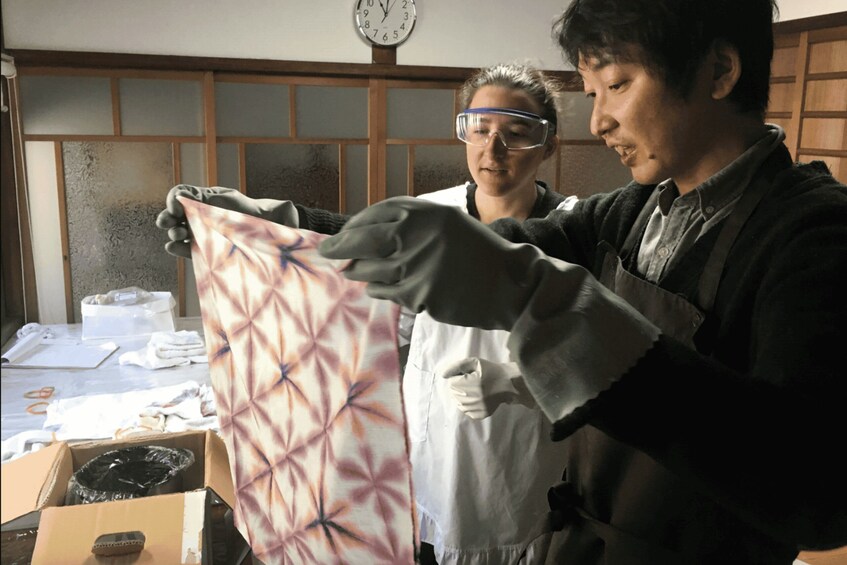
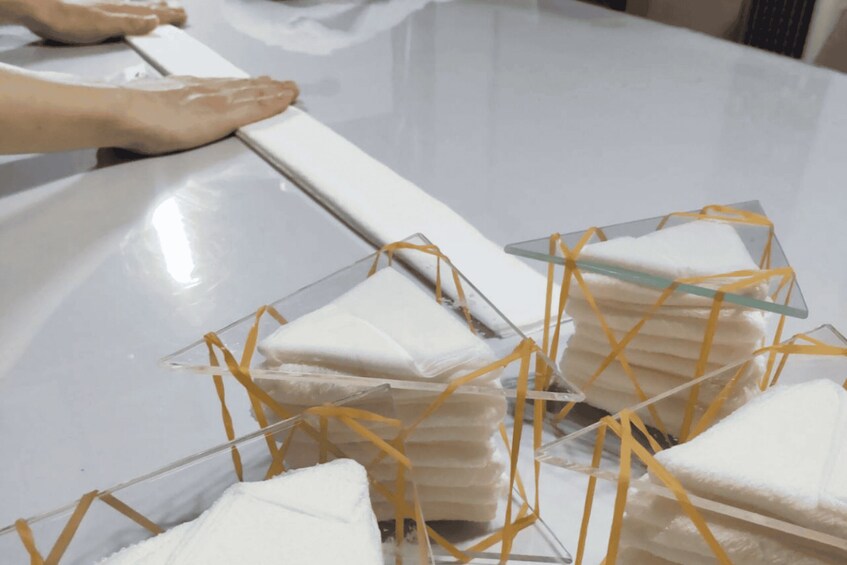
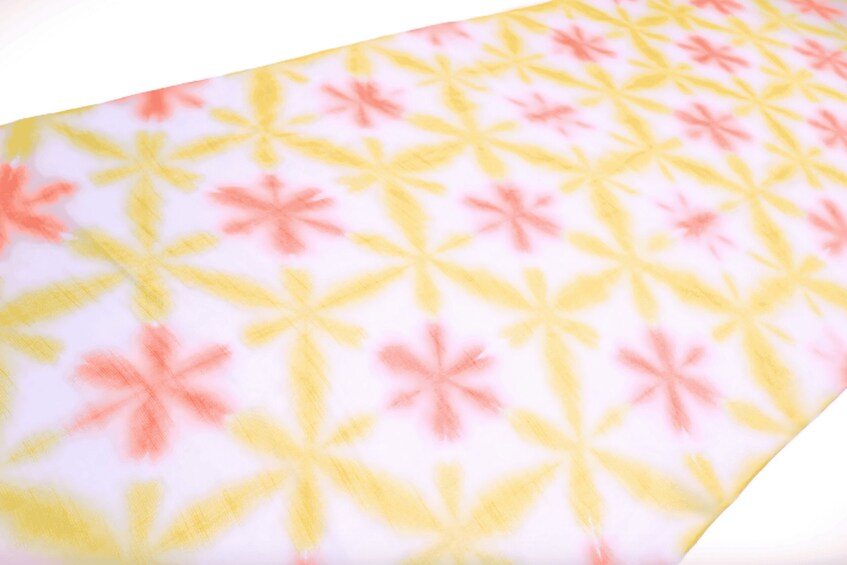
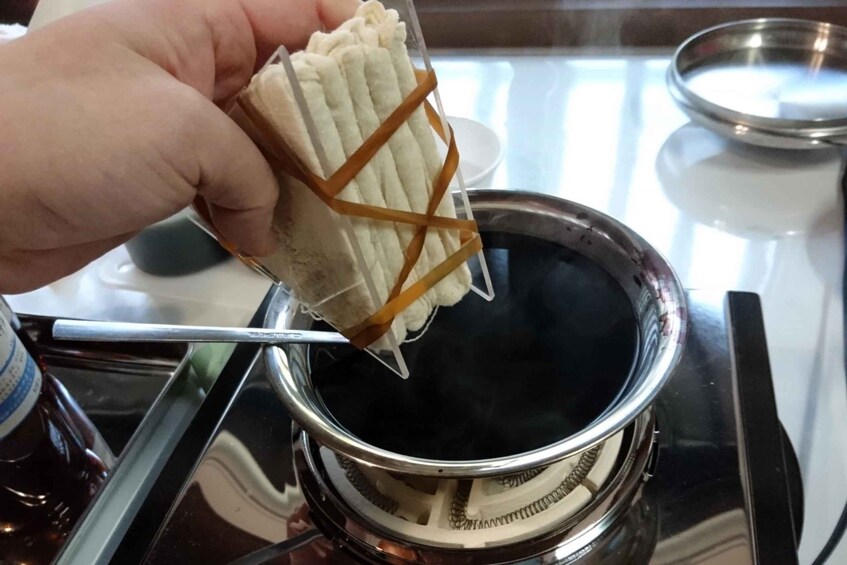
Next, watch as the artisan demonstrates the production process and explains how these delicate designs are achieved in kimono and other textiles. You will then be introduced to sekka shibori, a type of board-clamping dyeing. By folding the fabric into triangles or squares, clamping it between boards, and dipping it into dye, geometric and floral-like patterns emerge. The effect depends on the folds, the pressure of the boards, and how the dye penetrates the fabric.
With guidance, fold and clamp your own silk stole, then immerse it briefly in natural plant-based dyes prepared with Kifune’s “Full Moon Water”, known for enhancing the depth and clarity of color. You can choose one or two colors, such as madder orange, golden flower, pagoda tree yellow, lac red, purple lac, or natural indigo.
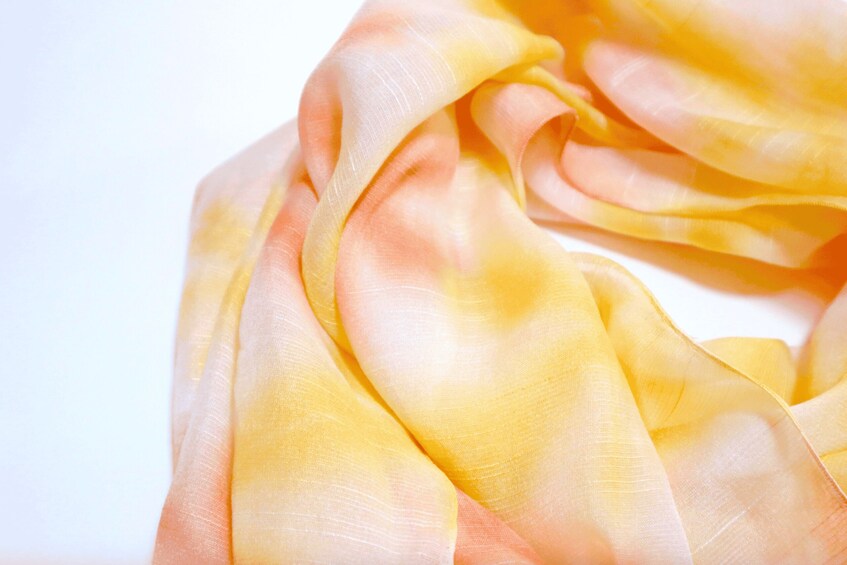
After dyeing, the stole is rinsed in water, and as the boards are removed, the patterns appear as if flowers are blooming underwater. The fabric is then carefully dried and smoothed, leaving you with a finished stole that is thin, soft, and lightweight, woven from fine Kiryu silk.
The entire experience lasts about two hours, and you can take your completed stole home the same day as a one-of-a-kind creation.