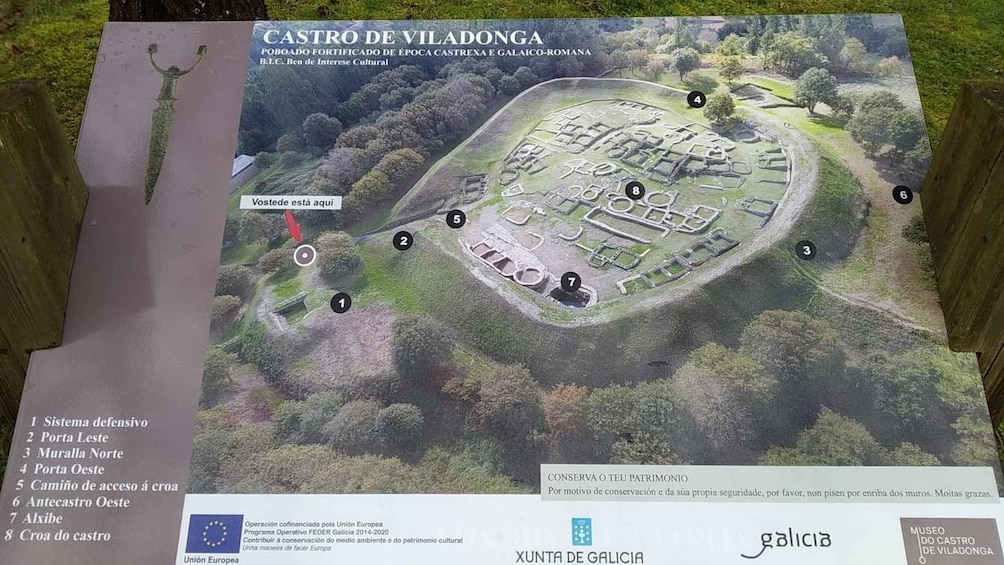
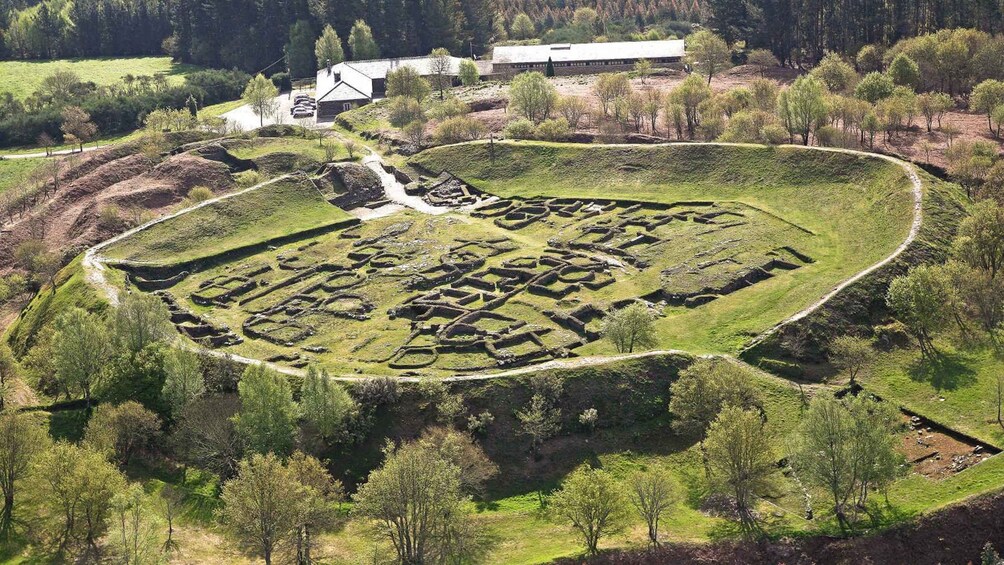
Near the city of Lugo we find a well-preserved example of a pre-Roman settlement, from the III - V centuries. The castrexos, the inhabitants who lived in Galician lands before the arrival of the Romans, lived in this type of settlement, which was later occupied by the Romans, changing the structure and urbanizing it.
The settlement, still in the process of study, can be visited almost completely, being able to appreciate the foundations of houses, streets, defensive walls and even some public buildings. To complete the visit we can see the museum of the castro, very didactic and explanatory.
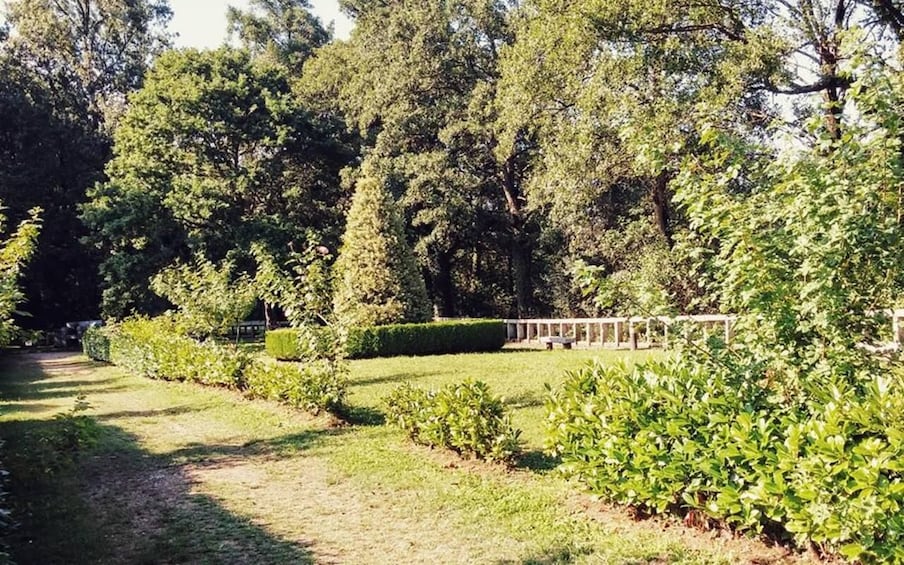
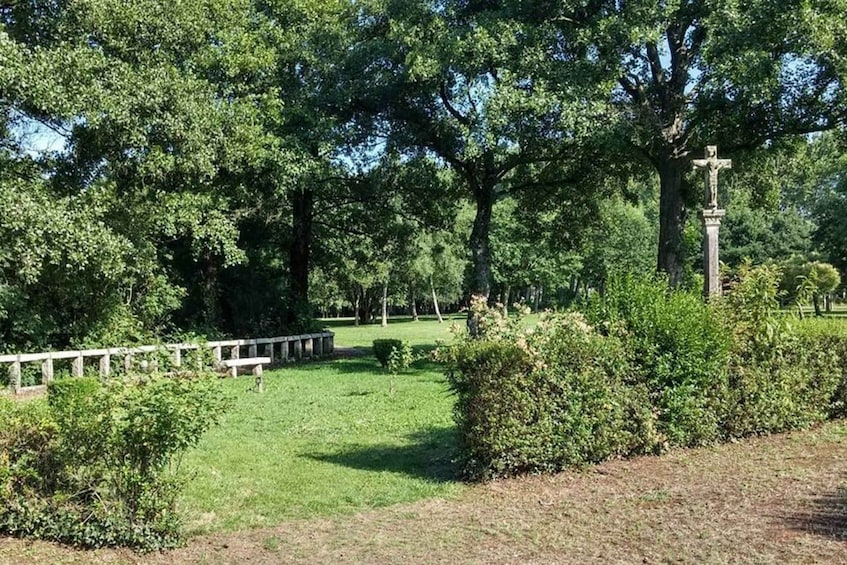
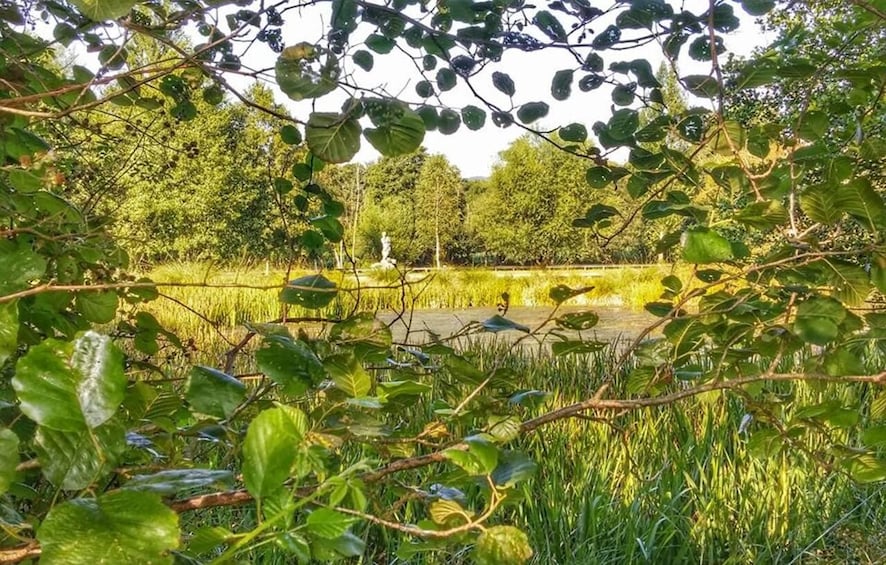
About 15 km north of the Castro, near Meira we will find the Lagoa de Fonmiñá, a lagoon where groundwater and karst origin, from various sources and from here begins its journey the “rio pai” Miño. In this lagoon we can take a walk and see the sculpture dedicated to the Galician hero Breogán, by Magín Picallo and Manuel Mallo.
These waters come from the source of the Miño, about 10 km above, in Pedregal de Irimia. Glacial moraine where groundwater emerges at the end of a funnel of stones, this space is the subject of many legends related to the river Minho.
From these two points, the Miño river will begin a journey of about 350 km throughout the Galician geography, crossing cities like Lugo or Ourense, leaving spectacular landscapes such as the Ribeira Sacra, full of vineyards and monasteries, and ending its last 40 km serving as a natural border between Galicia and Portugal.