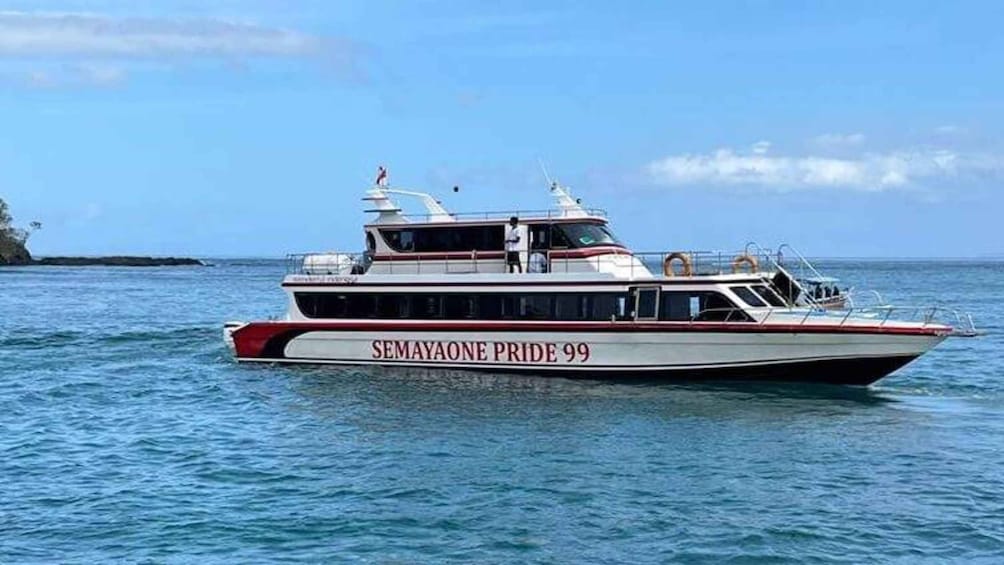
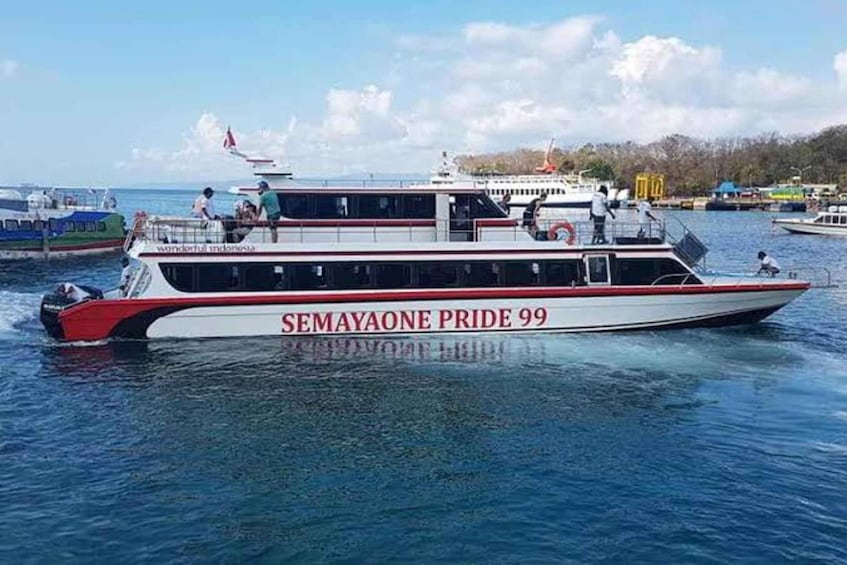
Begin your journey at the bustling harbors of Gili Trawangan, Gili Air, or Bangsal Pier in Lombok. By 13:00 pm, the beaches and jetties come alive with energy. Backpackers, couples, and adventurers gather under the shade of beachside cafes, checking in at small wooden ticketing booths. The local crew members, seasoned by the sea, efficiently tag luggage and organize passengers.
As the sleek, multi-engined fast boat pulls up to the shore, the excitement becomes palpable. Depending on the tide, you might have to wade through knee-deep, crystal-clear water to board, immediately connecting you with the tropical elements. Step into the air-conditioned cabin and find comfortable padded seats, though many travelers instantly eye the rooftop deck—the ultimate vantage point for sun-seekers and photographers.
With a roar of its powerful quadruple outboard engines, the fast boat glides away from the shallow reefs. The iconic white-sand beaches of the Gilis begin to shrink, and the massive, cloud-shrouded silhouette of Lombok’s Mount Rinjani dominates the horizon to the east.
As the vessel enters the Lombok Strait, the true power of the fast ferry becomes apparent. These boats are designed to cut through the open ocean swells at speeds of up to 30 to 35 knots. The ride can be a thrilling rollercoaster of sea spray and gentle rolls, a testament to the deep ocean trenches that separate Bali and Lombok. On a clear day, the rooftop deck offers an unmatched panoramic view. The salty wind whips through your hair, the deep blue ocean stretches infinitely, and if you are lucky, a pod of flying fish or playful dolphins might race alongside the hull.
Inside the cabin, the vibe is relaxed. Upbeat music often plays over the speakers, blending with the rhythmic thrum of the engines. It is a perfect time to swap travel stories with fellow passengers or edit photos of the Gili sunsets.
The route typically takes the boat southwest, skirting the coast of Lombok before crossing the strait toward the Nusa Islands cluster. As the journey progresses, the topography shifts. The flat, coral-fringed topography of the Gilis fades into memory, replaced by the rising, rugged outlines of Nusa Lembongan and Nusa Ceningan in the distance. Beyond them, the imposing, dark limestone cliffs of Nusa Penida begin to materialize through the ocean haze.
After roughly 1.5 to 2 hours of exhilarating seafaring, the fast boat slows its engines as it approaches Nusa Penida, usually docking at either Buyuk Harbor or Kutampi Pier. The transition in scenery is breathtaking. Unlike the gentle shores you left behind in the morning, Nusa Penida greets you with raw, untamed grandeur. Steep, green hills rise sharply from the water’s edge, and the ocean takes on a brilliant, deep aquamarine shade.
Step off the boat and onto the pier, and feel the vibrant, chaotic energy of Bali’s most dramatic satellite island envelop you. A fleet of local drivers and scooters awaits, ready to whisk travelers away.