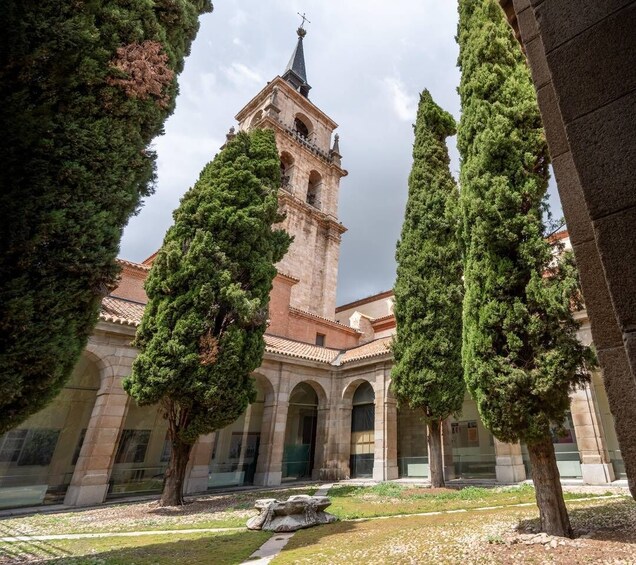
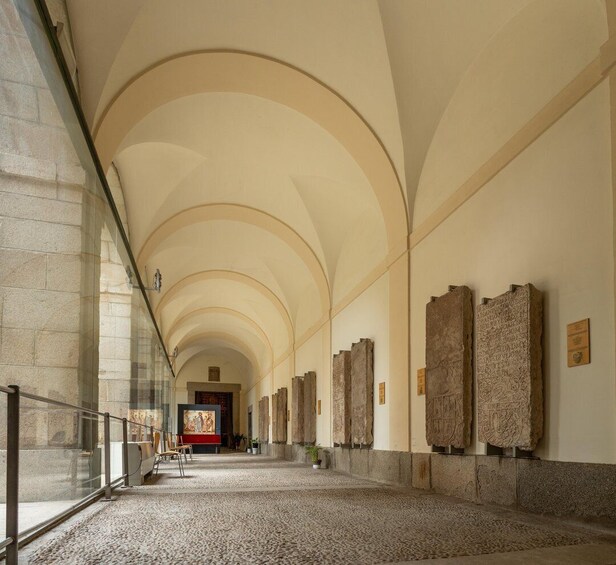
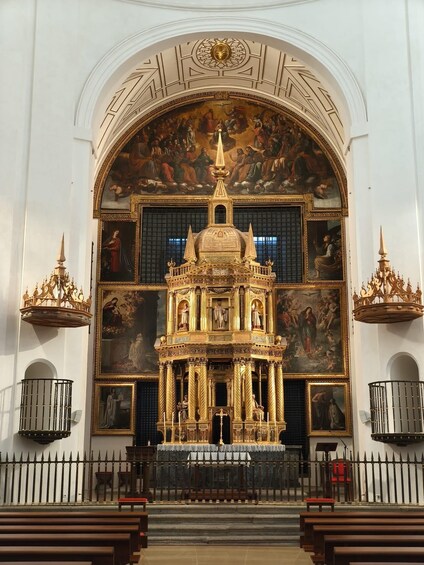
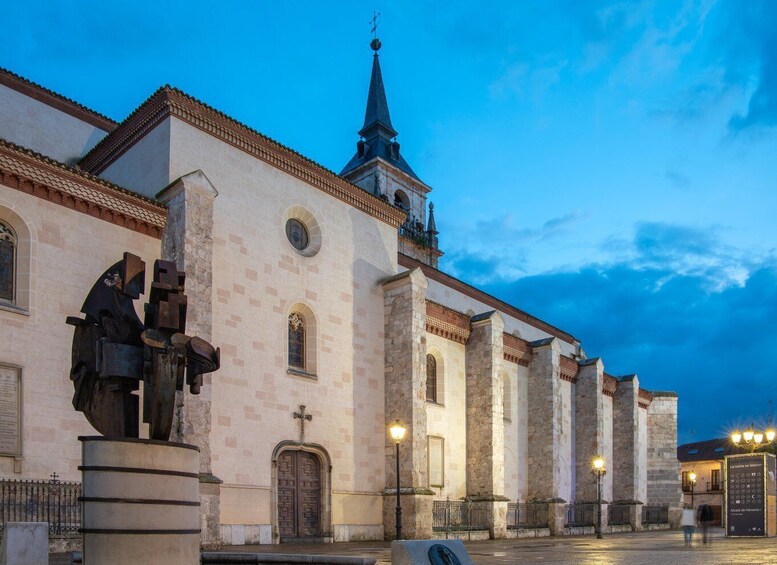
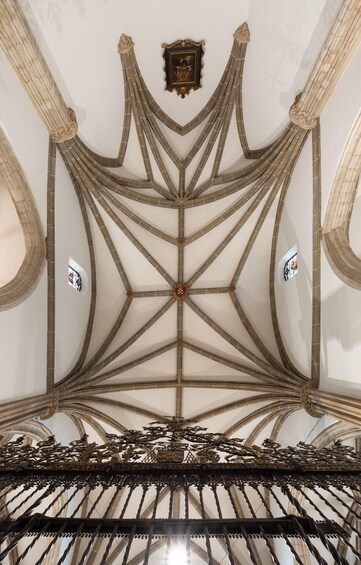
The history of this temple is fundamental to the development of the city of Alcalá, which is also protected by the archbishops of Toledo as a sacred place. A church was built on the site of the old martyrium, which was rebuilt by Rodrigo Jiménez de Rada, the man behind the construction of Toledo Cathedral. It was renamed the Chapel of the Archbishops and enlarged by Archbishop García Gudiel in 1290. At the request of Archbishop Carrillo, a collegiate church was erected in 1477, by bull of Pope Sixtus IV.
The great cardinal of Spain, Pedro González de Mendoza, brought the Renaissance to this temple and opened Castile to new currents of thought. It was in this period, on December 15, 1485, that Queen Isabella the Catholic gave birth in Alcalá to the Infanta Catalina—the future Catherine of Aragon—who was baptized eight days later in the Collegiate Church (now the cathedral since 1991) by Cardinal Mendoza himself, with the Catholic Monarchs Ferdinand and Isabella and their children, Prince Juan, then seven years old, and the Infantas Juana, Isabel, and María, attending the baptism.
One of the most important conventual enclaves of the 17th century in Alcalá de Henares, the Monastery of San Bernardo. Founded by the Cardinal Archbishop of Toledo, Bernardo de Sandoval y Rojas.
The interior surprises, in deliberate contrast to the austere curtain façade, the oval floor plan, and the grandiose oval dome that covers it, the largest of its kind in Spain.
The building is the work of the architect Juan Gómez de Mora, the most important master of his time. Juan Gómez de Mora was linked to the royal architecture of Felipe II through his family and his training, although his own work was mainly developed under the reigns of Felipe III and Felipe IV.
During the construction of this temple, Juan Gómez de Mora alternated his work with royal projects, such as his involvement in the Pantheon of the Monastery of El Escorial and the Royal College of the Society of Jesus in Salamanca.
The temple is modeled after the Roman Santa Anna dei Palafrenieri, a work by Vignola that, in turn, is based on Serlio's Treatise on Architecture.