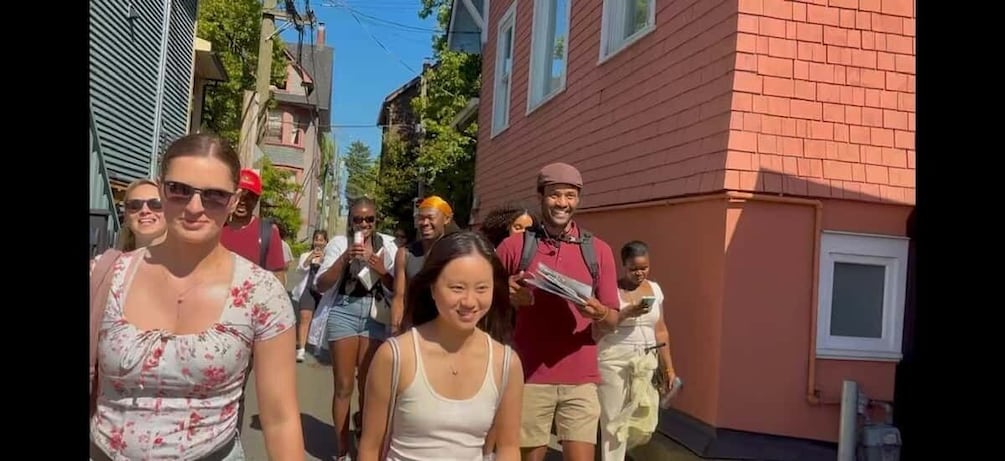
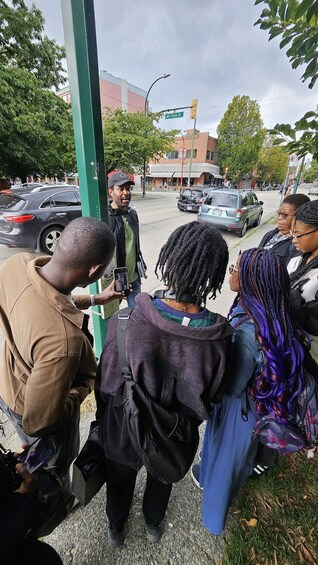
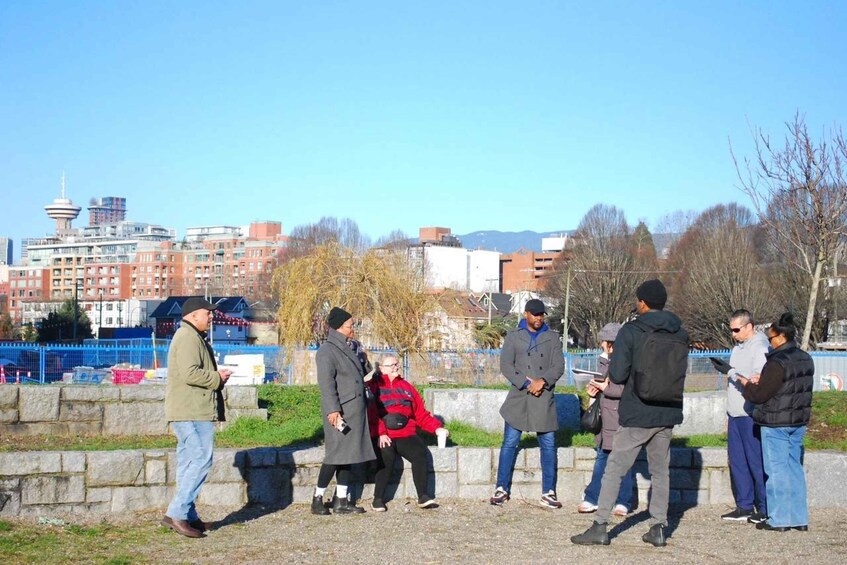
Begin your journey at Vancouver’s Pacific Central Station, a stunning city landmark beside the former Union Station, now the future site of St. Paul’s Hospital. From here, make your way toward Hogan’s Alley, framed by sweeping mountain views, rail lines, and the city skyline.
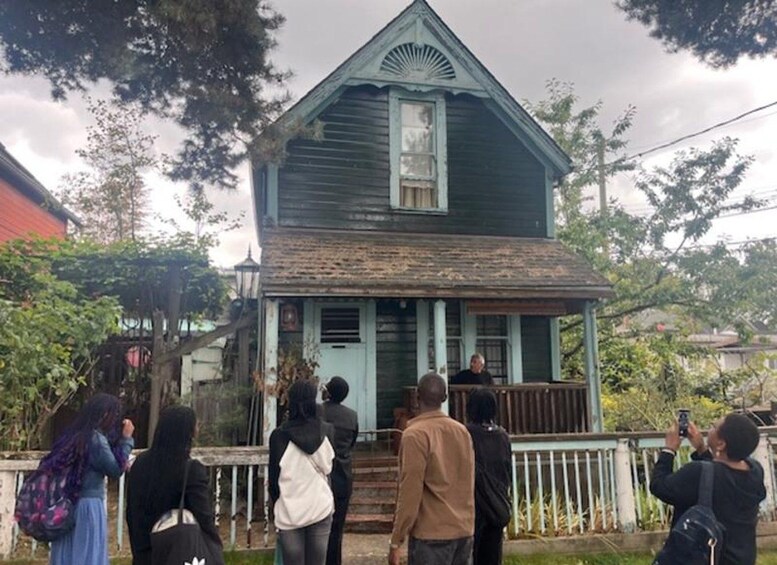
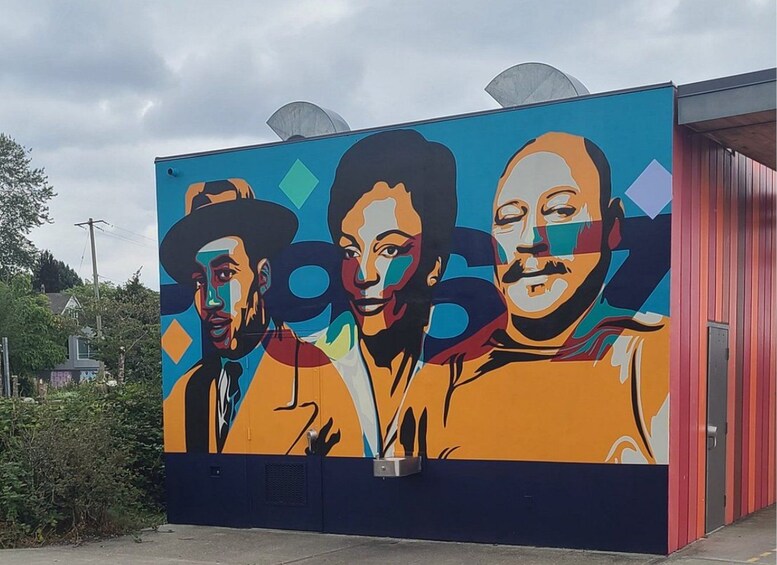
Trace the roots of British Columbia’s first Black migration, beginning in the mid-1800s, uncovering stories of resilience, culture, and community. Walk through the heart of Strathcona, exploring cherished landmarks, new developments, and the few surviving traces of the Alley’s once-vibrant Black neighborhood, culminating at the Jimi Hendrix Shrine, a local monument to legacy and sound.
At the start of the tour, receive a QR code linking to extensive historical materials, archival images, newspaper articles, and primary documents compiled through dedicated research, allowing you to follow the history as it unfolds.
This walking tour places the history of Black people in this province within the context of these present-day realities. It seeks to raise awareness, inspire dialogue, and call for collective reflection on how history shapes the inequities we see today. Together, explore pathways toward understanding, justice, and our shared humanity.
This walking tour weaves together the interconnected stories of culture, resilience, and resistance that define Vancouver’s Black history. Through the lens of Hogan’s Alley, explore how identity, community, and belonging intersect with urban development, displacement, and migration.
Central to the tour are themes of colonialism and segregation, the transatlantic slave trade, and the enduring effects of anti-Blackness across generations. Examine the cultural influence of Black people through food, music, and art, and highlight the role of community institutions such as the church in preserving dignity and unity.
Engage with the complex realities of urban renewal in the 1970s, systemic injustice, and the civil rights activism that emerged in response. The tour also considers the psychological and generational impacts of oppression, the importance of representation, and the ongoing struggle for equity and belonging.
Ultimately, these themes invite you to reflect on community resilience, shared humanity, and the possibilities of reimagining a future rooted in justice and inclusion.